
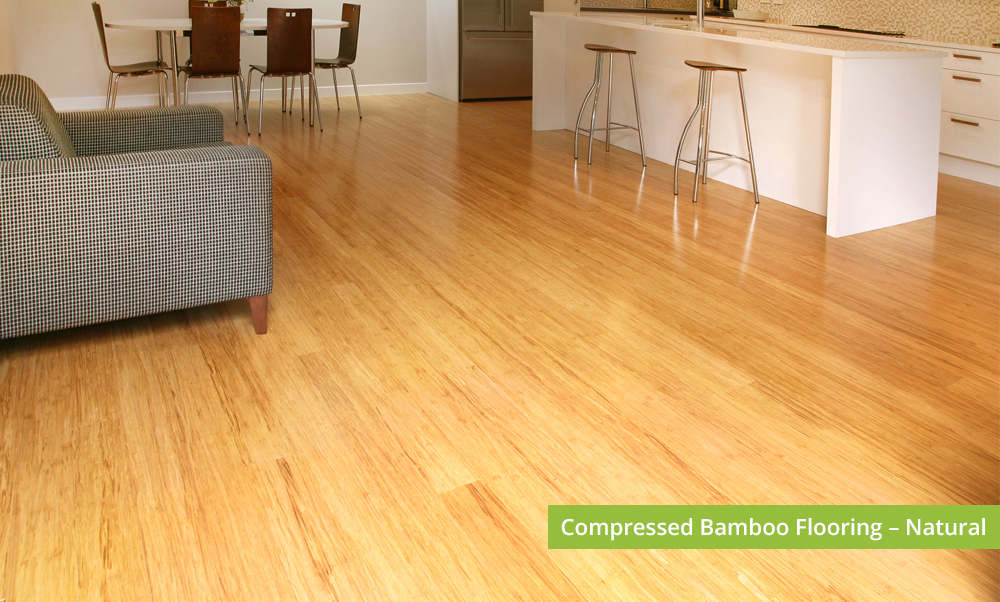
Many homeowners are drawn to natural bamboo flooring for its striking aesthetic, rapid renewability, and competitive pricing. It offers a bright, clean look that reflects light beautifully and aligns with environmentally conscious living. However, making the leap from admiring a small sample in a showroom to living with a fully installed floor requires careful navigation. Because bamboo is a hollow grass engineered into a solid flooring material, it behaves quite differently than traditional solid hardwoods like oak, hickory, or maple.
Buyers often treat bamboo exactly like standard timber, leading to decisions that can compromise the longevity, safety, and performance of the floor. By identifying and avoiding the most frequent purchasing missteps, you can ensure your flooring investment yields a durable, beautiful surface that enhances your home for decades.
Mistake 1: Treating All Bamboo as the Same Material
The single most common error buyers make is walking into a store and simply asking for "bamboo flooring." Bamboo is not a monolithic product; its performance depends entirely on how it is manufactured. There are three primary constructions, and confusing them will lead to mismatched expectations.
Natural horizontal bamboo features strips laid flat, showcasing the distinct "knuckles" or nodes of the grass. Natural vertical bamboo turns those strips on their side, creating a sleek, pinstriped appearance. Both of these traditional styles have a moderate hardness, comparable to standard oak.
Strand-woven bamboo, on the other hand, is created by shredding the bamboo fibers, mixing them with resins, and compressing them under immense hydraulic pressure. This process yields a board that is exponentially harder and heavier than horizontal or vertical cuts. If you have a busy household with large dogs and heavy foot traffic, buying horizontal bamboo under the assumption that "all bamboo is ultra-hard" will result in a floor that shows dents and scratches much faster than anticipated. You must match the specific manufacturing style to the daily reality of your living space.
Mistake 2: Ignoring the Subfloor Requirements
A beautiful natural bamboo floor is only as good as the subfloor beneath it. Because bamboo planks, especially the vertical and horizontal varieties, have a very straight and consistent grain, any imperfections in the subfloor will be visibly telegraphed to the surface.
Buyers often budget for the flooring material but fail to budget for subfloor preparation. If you are installing over a concrete slab, the slab must be perfectly level. Even slight dips or humps can cause the bamboo planks to separate at the seams, creating gaps that trap dirt and weaken the structural integrity of the floor. Furthermore, concrete naturally holds and releases moisture. Failing to test the concrete for moisture emissions and neglecting to install a high-quality vapor barrier will inevitably lead to the bamboo absorbing that moisture from the bottom up. This causes "cupping," where the edges of the planks curl upward, ruining the smooth surface.
Before purchasing, consult with an installer to assess your subfloor. Knowing whether you need self-leveling compound or specialized moisture barriers will give you an accurate picture of the total project cost.
Mistake 3: Misunderstanding the Acclimation Process
Bamboo is a hygroscopic material, meaning it absorbs and releases moisture depending on the humidity of its surrounding environment. When flooring is shipped from a warehouse to your home, it is moving from one climate zone to another.
A severe mistake many eager homeowners make is scheduling the installation for the same day the flooring is delivered. Bamboo must be allowed to acclimate to the specific room where it will be installed. This involves opening the boxes and letting the planks rest in the conditioned air of your home for a minimum of 72 hours, though some manufacturers require a full week or more.
If you install the bamboo straight out of the box, it will begin to acclimate after it is already locked or nailed into place. If your home is more humid than the warehouse, the boards will expand, pushing against each other and buckling. If your home is drier, the boards will shrink, leaving unsightly gaps. Patience during the delivery phase is absolutely critical for a successful installation.
Mistake 4: Overlooking Indoor Air Quality and Adhesives
Because natural bamboo flooring is an engineered composite—strips or fibers held together by glue—the quality of the adhesive is just as important as the quality of the grass itself.
Early iterations of bamboo flooring gained a negative reputation for using urea-formaldehyde adhesives, which would off-gas toxic volatile organic compounds (VOCs) into the home. While the industry has improved dramatically, cheap bamboo flooring still carries this risk. Buyers who focus solely on finding the lowest price per square foot often overlook the chemical makeup of the product.
When shopping, it is vital to verify the environmental certifications of the specific brand. Look for clear documentation stating the flooring is manufactured with "No Added Formaldehyde" (NAF). Independent certifications such as FloorScore or Greenguard Gold guarantee that the product has been rigorously tested for emissions and is safe for residential indoor air quality. Buying a floor to support the environment makes little sense if that same floor pollutes the air inside your living room.
Mistake 5: Failing to Order the Correct Overage
Calculating the square footage of a room is simple math, but ordering the exact square footage of the room is a guaranteed recipe for delays and frustration. Flooring installations require cuts to fit around corners, doorways, and closets, and the cut pieces often cannot be reused elsewhere.
Furthermore, bamboo is a natural product. Even within a high-quality batch, there may be a few boards with color variations or minor milling defects that you prefer not to place in the center of your room.
The industry standard is to order an additional 10% to 15% above your actual square footage. For rooms with complex layouts, angled walls, or custom borders, that overage should be pushed closer to 20%. Running short on material halfway through a project means pausing the installation, ordering more boxes, paying additional shipping fees, and hoping the new boxes come from the same manufacturing run so the dye lot matches. Ordering the correct overage upfront saves money and stress in the long run.
Mistake 6: Unrealistic Expectations Regarding Water Resistance
There is a persistent myth that because bamboo grows in tropical, humid environments, the resulting flooring must be waterproof. This is fundamentally incorrect.
Natural bamboo flooring performs admirably against occasional spills if they are wiped up immediately. Its dense surface provides a brief window of protection. However, it is not impervious to standing water. If a dishwasher leaks, a pet has an accident that goes unnoticed, or wet boots are repeatedly left by the front door, the moisture will eventually seep between the seams of the planks. Once the moisture reaches the unprotected core of the board, the bamboo will swell, warp, and potentially harbor mold.
Installing natural bamboo in full bathrooms with showers, or in poorly ventilated laundry rooms, is a high-risk gamble. For areas prone to standing water, tile or luxury vinyl planks remain the superior choices. Understanding the moisture limitations of bamboo ensures you place it in areas where it will thrive, such as living rooms, bedrooms, and dining areas.
Mistake 7: Skimping on the Finish Quality
The physical hardness of the bamboo is only half the durability equation; the other half is the protective finish applied at the factory.
Many buyers closely compare the prices of two seemingly identical natural bamboo options, ultimately choosing the cheaper one. Often, the price difference lies in the topcoat. Premium bamboo flooring is sealed with multiple layers of aluminum oxide finish, cured under ultraviolet light. This creates an incredibly tough, transparent shield that protects the raw bamboo fibers from micro-scratches caused by pet claws, sliding chairs, and dirt tracked in from outside.
Budget options may feature fewer coats or inferior polyurethane blends that wear down quickly in high-traffic zones. Once the finish is compromised, dirt becomes embedded directly into the bamboo, making the floor look perpetually dingy. Investing slightly more in a product with a robust, multi-coat aluminum oxide finish will dramatically extend the period before the floor needs to be professionally sanded and recoated.
Mistake 8: Choosing the Wrong Installation Method
The method used to secure the floor to the subfloor must be matched to the environment and the specific type of bamboo. There are generally three options: floating (click-lock), nail-down, and glue-down.
Floating floors are popular for their ease of installation, making them a favorite for DIY projects. The planks snap together and rest over an underlayment pad. However, if the subfloor is uneven, a floating bamboo floor can feel hollow or "bouncy" underfoot.
Nail-down installations provide a solid, traditional feel but require a wooden subfloor like plywood. Glue-down installations are excellent for concrete slabs and provide great acoustic dampening, but the adhesive used must have elasticity to allow the bamboo to subtly expand and contract with seasonal changes. Using a rigid, cheap glue will cause the bamboo planks to crack when the humidity shifts. Relying on an installer who insists on a "one size fits all" method, rather than evaluating your home's specific architecture, is a structural misstep.
Final Thoughts on Securing the Right Floor
Purchasing natural bamboo flooring is an exciting step toward creating a beautiful, sustainable living space. The bright, organic aesthetic of the natural grain provides a fresh foundation for nearly any design style. By taking the time to understand the manufacturing differences, respecting the acclimation period, verifying the safety of the adhesives, and preparing the subfloor correctly, you bypass the common pitfalls that frustrate rushed buyers. A well-researched purchase ensures your natural bamboo floor remains a source of pride, structural integrity, and daily comfort for your home.